How Textile & RMG Factories Can Prepare for Net Zero Manufacturing
Published at - August 10, 2026

Bangladesh's textile and ready-made garment (RMG) industry is a major part of the country's manufacturing and export economy. As global brands and buyers place greater emphasis on sustainability, factories are facing increasing expectations to reduce carbon emissions, improve energy efficiency, and adopt cleaner sources of energy.
For textile and RMG manufacturers, Net Zero manufacturing is becoming more than a sustainability goal—it is becoming an important part of long-term competitiveness.
The transition to Net Zero does not happen through a single project. It requires a practical combination of energy efficiency, renewable energy adoption, better energy management, and long-term decarbonization planning.
For many factories, industrial rooftop solar can be an important step in that journey.
Why Net Zero Matters for Textile & RMG Factories
The expectations surrounding sustainable manufacturing are changing rapidly. Global buyers are increasingly interested in how products are manufactured, how much carbon is associated with production, and what manufacturers are doing to reduce their environmental impact.
This makes areas such as:
- Carbon emissions reduction
- Renewable energy adoption
- Energy efficiency
- ESG performance
- Sustainable manufacturing
increasingly important for export-oriented factories.
For Bangladesh's textile and RMG sector, stronger environmental performance can help manufacturers respond to changing buyer expectations while building a more sustainable and resilient business.
Start with Understanding Energy Consumption
A successful Net Zero strategy begins with understanding how a factory uses energy. Textile and RMG facilities can have significant electricity requirements across production machinery, HVAC systems, lighting, compressors, pumps, and other industrial operations.
Before investing in new energy solutions, factories should identify their major energy-consuming areas and understand where efficiency improvements are possible.
This can help manufacturers:
- Identify unnecessary energy consumption
- Improve operational efficiency
- Prioritize energy-saving opportunities
- Better understand their renewable energy requirements
Energy efficiency and renewable energy should work together. Reducing unnecessary consumption first can make the transition to cleaner energy more effective.
Make Better Use of Factory Rooftops

For many textile and RMG factories, one of the most valuable energy assets is already available—the factory rooftop.
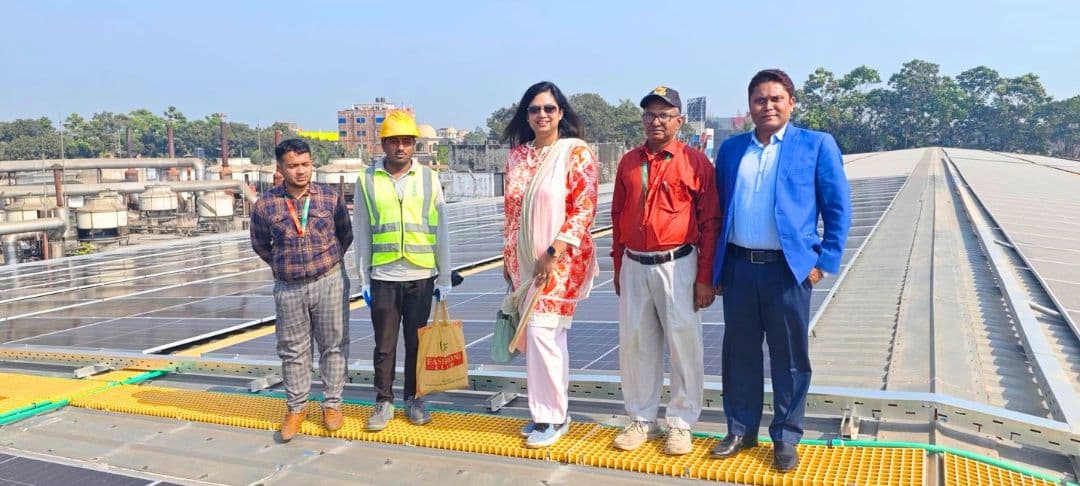
Large industrial rooftops can provide significant space for solar power generation. By installing an industrial rooftop solar system, factories can generate clean electricity onsite and integrate renewable energy into their existing operations.
Rooftop solar for textile factories can help manufacturers:
- Reduce dependence on grid electricity
- Lower energy costs
- Increase renewable energy consumption
- Reduce operational carbon emissions
- Support ESG and sustainability objectives
This turns an otherwise underutilized rooftop into a productive clean-energy asset.
For factories with substantial daytime electricity demand, rooftop solar can be particularly relevant as part of a broader energy strategy.
Build a Practical Net Zero Roadmap

Net Zero is a long-term journey, and factories do not need to transform everything at once. A practical roadmap can follow four key stages:
1. Measure Understand current energy consumption and identify the major sources of emissions within the operation.
2. Improve Focus on energy efficiency and reduce unnecessary energy consumption wherever practical.
3. Transition Increase the use of renewable energy through solutions such as industrial rooftop solar.
4. Monitor Track energy performance and renewable energy generation to understand progress and identify further opportunities.
This approach allows manufacturers to make measurable progress while keeping sustainability initiatives aligned with operational and business priorities.
How Rooftop Solar Supports Sustainable Manufacturing
Rooftop solar can contribute to Net Zero preparation in several ways.
First, it enables factories to generate renewable electricity onsite. This can reduce reliance on conventional electricity sources and support lower-carbon operations.
Second, it can help factories manage long-term energy costs. For energy-intensive industries such as textiles and RMG, managing energy expenses is closely connected to maintaining competitiveness.
Finally, renewable energy adoption can become a measurable part of a factory's broader sustainability and ESG strategy.
Therefore, rooftop solar should not be viewed simply as a solar installation. It can be an important component of a factory's long-term energy transition.
Why Industries Choose Solaric

Moving toward Net Zero requires more than installing solar panels. Industrial facilities need a solar solution that is properly engineered, carefully implemented, monitored, and supported over the long term.
This is where the right solar partner becomes important.
Solaric focuses on delivering industrial rooftop solar solutions designed around the energy requirements and operational realities of businesses.
Solaric currently has 192+ MW commissioned, 40 MW under development, and 86+ operational projects, demonstrating its experience in delivering and operating industrial solar projects.
Solaric's approach combines several key capabilities:
Engineering-driven solutions: Industrial solar systems require careful planning and system design. Solaric focuses on engineering-driven solutions designed to meet the specific requirements of industrial facilities.
Flexible CapEx and OpEx models: Different businesses have different investment priorities. Solaric offers both CapEx and OpEx models, giving industries flexibility in how they adopt rooftop solar.
Advanced monitoring: Understanding system performance is essential for long-term value. Advanced monitoring solutions help businesses track their solar system's performance.
Long-term Operations & Maintenance: A solar project is a long-term energy asset. Solaric provides Operations & Maintenance services to support reliable performance beyond project installation.
Industrial-focused experience: From textile and RMG facilities to manufacturing, FMCG, and other industrial businesses, Solaric works with industries seeking practical renewable energy solutions.
For manufacturers, this means choosing a solar partner that understands that rooftop solar is not simply about installing equipment—it is about creating a reliable energy asset that supports the factory's long-term business and sustainability goals.
The Road to Net Zero Starts with Practical Action

For Bangladesh's textile and RMG factories, preparing for Net Zero does not require an overnight transformation.
The journey can begin with understanding energy consumption, improving efficiency, increasing renewable energy adoption, and developing a clear long-term energy strategy. Industrial rooftop solar can play an important role in that transition by helping factories generate clean energy onsite while supporting energy cost management and sustainability objectives.
As global manufacturing continues to move toward cleaner and more responsible production, factories that begin their energy transition today can position themselves for a more sustainable and competitive future.
__The journey to Net Zero starts with measurable action—and for many textile and RMG factories, that action can begin right on the rooftop. __
Contact Solaric
Ready to explore rooftop solar for your factory?
Connect with Solaric to discuss how an industrial rooftop solar solution can support your energy, sustainability, and long-term business goals.
Phone: +880 1750-150251
Email: megaroof@solaricglobal.com
Website: www.solaricglobal.com